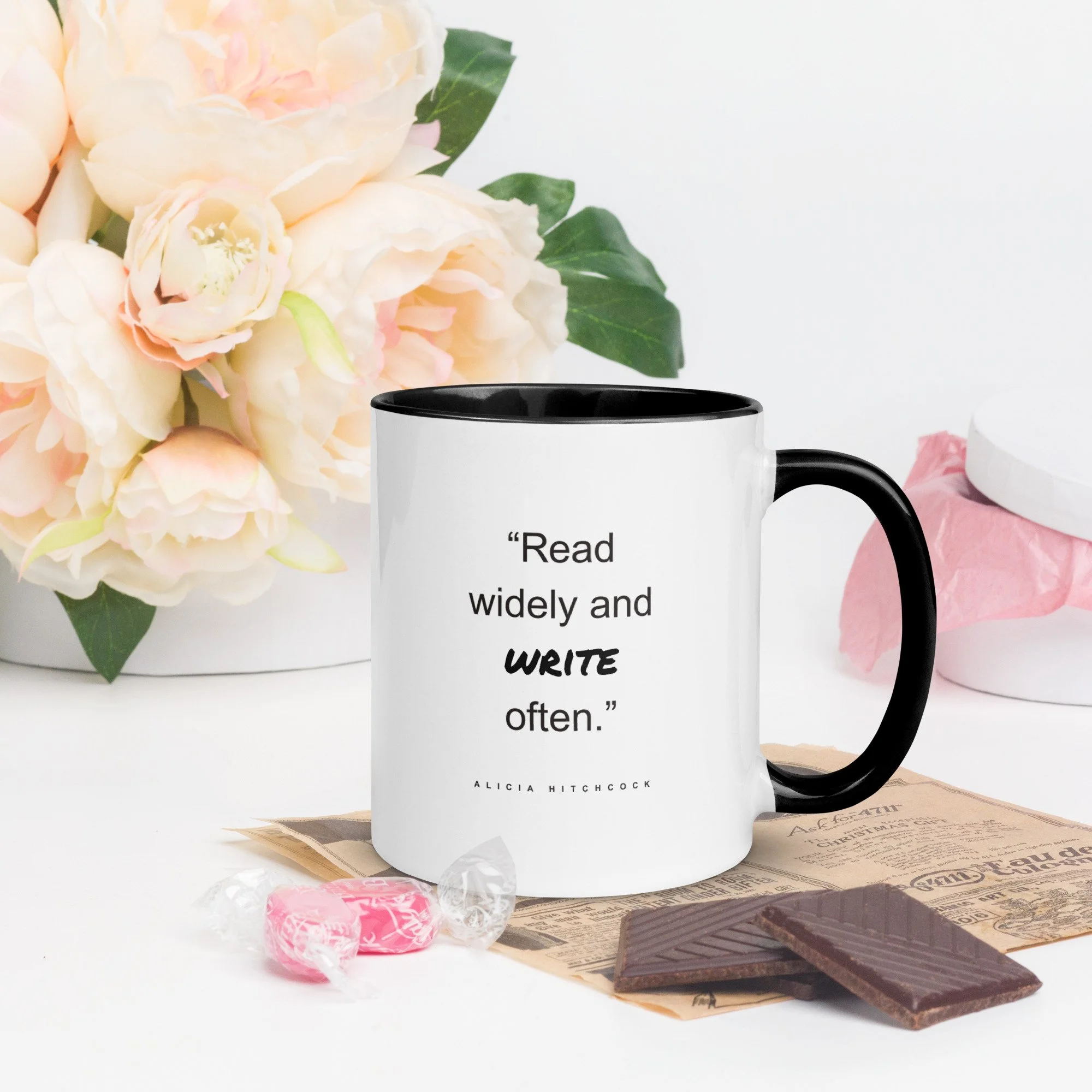
ALICIA HITCHCOCK “Read widely and write often.”
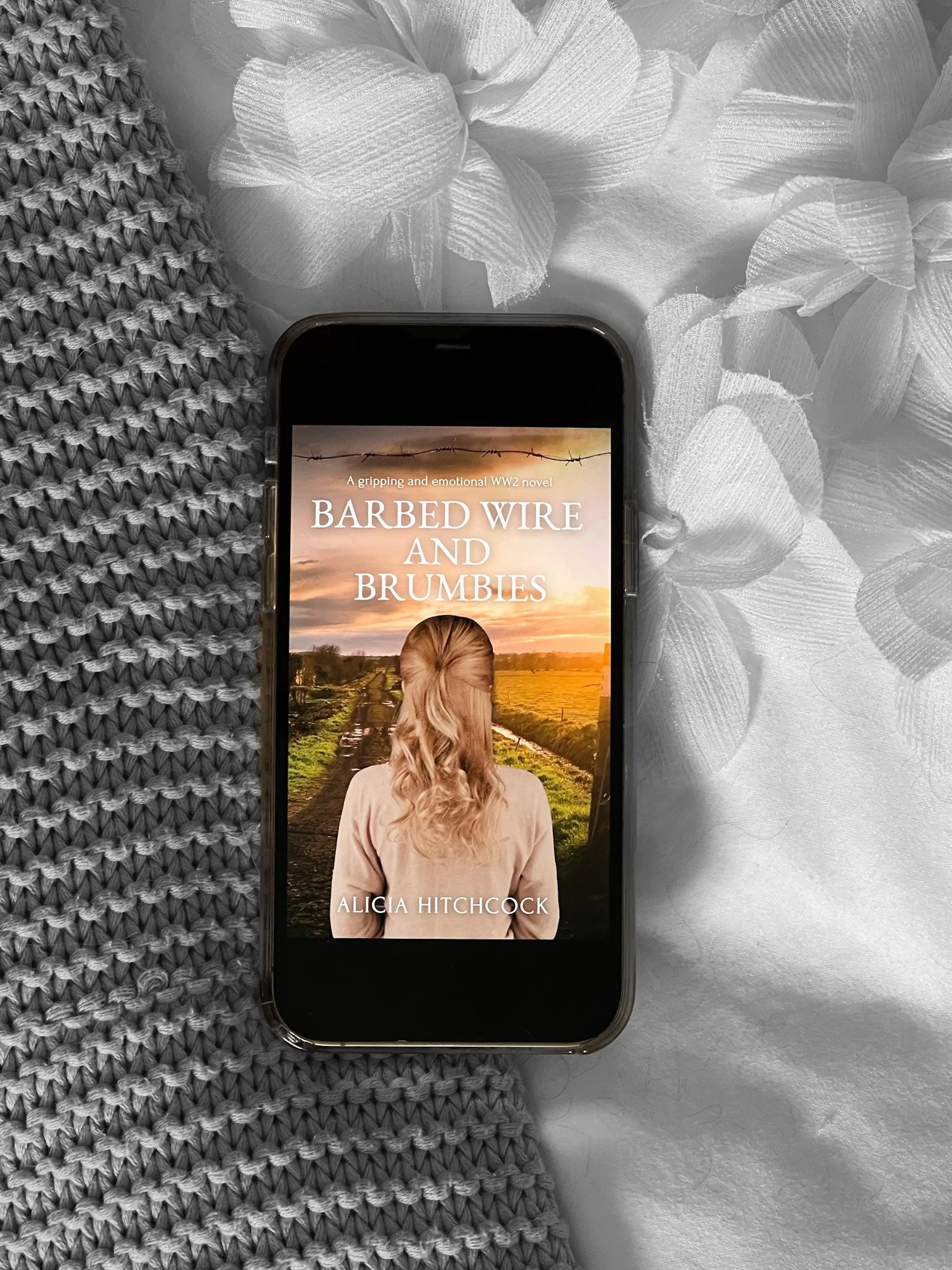
Kelly’s Writerly Q&A April 2025 Author Interview is with Alicia Hitchcock, an Australian author who creates historical and contemporary novels filled with emotionally captivating drama, high-stakes tension, and heartfelt romance. She’s published a non-fiction book Managing a FIFO Family: A Practical Guide to Help Families Navigate the Fly-In-Fly-Out Lifestyle, a contemporary fiction novelette, Orange Sky, and has another novel already on pre-order. Alicia’s debut novel, Barbed Wire and Brumbies, set in WA during WWII, was released in November last year and that’s what I’m keen to talk about today!
Kelly: Hi Alicia, thanks for taking the time to answer some writerly questions. Congratulations on the publication of your debut novel, Barbed Wire and Brumbies. What’s it about?
Alicia: Barbed Wire and Brumbies is a dual-POV WW2 historical fiction based on a Western Australian prisoner of war camp.
Here's my elevator pitch: In the sun-scorched fields of Western Australia, two people from different worlds are about to discover that love knows no boundaries. When Italian prisoner of war Giuseppe Russo arrives at the Sleeman family farm on day release from Marrinup POW Camp, neither he nor the bold-spirited Maggie can predict how their lives will intertwine, igniting a romance that defies the prejudices of the local community.
Kelly: Having read it, I must tell you how much I loved Maggie’s spirit and Giuseppe’s kind heart. How do you come up with your story ideas?
Alicia: The idea for this novel was sparked by a visit to the ruins of the Marrinup prisoner-of-war camp near Dwellingup, Western Australia.
A few years ago, my husband and I spotted a small sign on the side of the road that read ‘Marrinup POW Camp’. We spent the next hour or two walking around the site, viewing what was left of the building foundations, and reading the faded information signs. We were both struck by the fact that this camp wasn’t too far from where we lived, but we had never heard of it.
The day we visited, the weather was perfect, and the birds were chirping. It felt serene out there in the bush. But as I was walking around, the spark of a story formed in my mind. I might have felt peaceful, but the men who were imprisoned there probably felt differently about the place.
Other story ideas come from my interests, news reports, or even something as simple as a snippet of conversation I’ve overheard in a café.
Story ideas are everywhere if we open our minds to them.
Kelly: Your passion shines through on the page. You’ve written one novel, Barbed Wire and Brumbies, a non-fiction book, Managing a FIFO Family, and a novelette: Orange Sky: Sanderson Ridge Prequel. I’m blown away by your output! How do you manage everything?
Alicia: I like to challenge myself and channel my energy and creativity into new projects. I wrote Managing a FIFO Family back in 2017 when I was studying for a business degree. The subject was close to my heart as my husband worked DIDO (drive in, drive out) for just over 10 years. I decided to self-publish that book in 2018 as it was less than 100 pages, and a few months later I had ‘Managing a FIFO Family’ in my hands.
Barbed Wire and Brumbies was written on and off over the last few years in between work and family commitments. While I was waiting to hear from agents and publishers, I started working on my second historical fiction. Once Barbed Wire and Brumbies was released in November, I wanted something else to steer my creativity into and that’s when I wrote my first contemporary fiction, Orange Sky. It’s the prequel novelette for a potential 4 book women’s fiction series. I’ve since gone back to revising and editing the other historical fiction.
I’m also very grateful to have a supportive husband and children who don’t mind me spending a lot of time in my office.
Kelly: Here’s to all the husbands and families that support us writers! What does your typical day of writing look like?
Alicia: I do a lot of pre-planning before I sit down to write a manuscript. So, once I’ve got the kids off to school, I check my emails, answer the easy ones, and flag the more involved ones for later. I’ll do a quick scan of social media, then I’ll open whatever manuscript I’m currently working on and read the last few paragraphs to get myself into the right headspace.
I’ve found some fantastic immersive writing sessions on YouTube that fill the office with relaxing music and act as a gorgeous background on my spare screen, but they also have a countdown timer. I’ll typically work for 25 minutes and then take a 5-minute break. It’s amazing how much you can get done in a 25-minute window.
Kelly: I love that YouTube tip! There’s nothing like celebrating a publishing win, but I believe it’s even more important to talk about what came before, can you share a rejection story?
Alicia: After I’d completed Barbed Wire and Brumbies, I spent countless hours researching agents and publishers and perfecting my query letter. I read the submission guidelines multiple times before I sent off my query to ensure I wouldn’t make an error that would see my query relegated to the recycle bin.
With each submission, I imagined my book being published and readers finding enjoyment and comfort in the words. Whenever I sent a query, I felt a glimmer of hope, and it stayed with me until I received a rejection email from the person or organisation I’d contacted. There are so many reasons for a rejection. Sometimes a story can be rejected because the publisher already has a similar genre or story coming out in the next year. A story can be rejected simply based on people’s perception, their likes, and dislikes, and even their mood at the time.
Then in August 2024, after I’d racked up around 6 rejections, I attended the Romance Writers of Australia conference. I was booked to pitch to 3 agents and had spent weeks perfecting and practising my pitch. That morning, I attended a panel session where the speakers included 2 of the agents I was going to pitch to. During the Q&A, an audience member asked them what they thought of WW2 fiction. Their response: “It's not selling right now. Shelve it for a few years.”
I was devastated! I'd worked so long on my novel and practised my pitch for hours, only to be told it wasn't worth the time I'd put in. I wallowed for a few weeks. I'd worked too hard on it only to shelve it until WW2 stories supposedly cycled back into fashion. That’s when I made the decision to independently publish the novel.
Kelly: That must have been hard to hear, but I love how it inspired you!
Kelly: You offer a workshop on the steps to self-publishing, why do you think it’s important to offer support to authors considering self-publishing?
Alicia: Writing can be isolating and even though there is an amazing online writing community, sometimes a face-to-face workshop can provide information and support that the online world can’t. In my workshops, I like to delve into all aspects of self-publishing. There are many benefits to this model of publishing. Indie authors have complete control of everything, from the actual story to the look and feel of the cover, and even down to which font is used in the interior. They get to choose when, where and how they’ll launch their book. They get to market it the way they want. It’s all up to them.
Of course, the downside to that is they are completely on their own - no publisher to answer questions or pump them up when they're feeling low, no access to an in-house designer, and no marketing budget or help with an advertising campaign. Often literary competitions won’t consider self-published works, and sometimes it can feel as if organisations and other authors don’t consider self-published novels worthy of attention because they weren’t created in the traditional way.
There is no right or wrong path. It is completely up to the individual, but I think if you’re going to head down the indie publishing route, you should be prepared for the steep learning curve. If you can handle all the elements involved, then by all means, go for it.
Kelly: Self-published authors can be very successful! When it comes to storyboarding, writers often don’t know where to start. Can you share some tips on how to map out their next idea?
Alicia: Writing a book is such an individual process. Everyone has their own way of doing things. If you’ve been in the writer space for a while, you’ve probably heard of plotting and pantsing. A plotter maps out their entire story from beginning to end, whereas a pantser has the spark of an idea, then just sits down and types whatever comes out of their mind.
With Barbed Wire and Brumbies, I wrote dot points of what I expected to happen in each chapter and then, as I was writing, the characters tended to lead the way. With my subsequent manuscripts, I’ve adopted the Save The Cat method. It’s a structured approach based on the book Save the Cat! Writes a Novel: The Last Book On Novel Writing You'll Ever Need by Jessica Brody.
Brody shares the key fundamentals that all good stories have in common. These are broken down into a “beat sheet” which includes 15 distinct elements. This is based on Blake Snyder’s methodology for screenwriters.
A main character’s transformation is the essential element of a strong plot. To have a transformation, there are a few key concepts that need to be involved:
The protagonist needs a problem or flaw (or several) that needs to be fixed.
The protagonist has a want or goal to pursue.
The protagonist has a need or life lesson to learn.
Another important element is the external “A story” and internal “B story”. The three-act structure with the 15 beats spread across the acts drives the weaving of the A and B story and brings about the protagonist’s transformation.
Ultimately, there are no new stories; what is achievable is a fresh take on stories. Only you can write your story in your own way and in your own voice.
Kelly: Save The Cat is my go-to for plotting too! What’s your top tip for aspiring authors?
Alicia: It’s fairly simple.
Read widely and write often.
Read in a variety of genres, learn as much as you can about the craft of writing, and write every day.
Kelly: Simply brilliant! What are you currently reading and loving?
Alicia: I’ve just finished reading The Tea Ladies of St Jude’s Hospital by Joanna Nell. I needed something lighter, less speculative, less murdery than the last book I’d read and Joanna Nell delivered. The story is light-hearted but touches on some important themes. The topics of aging, self-doubt, loneliness, and mental health are all covered in such a way as to make you really care about what the characters are going through. It’s a lovely novel that will make you feel warm and fuzzy.
Kelly: Lighter reads are so necessary sometimes. So, what can we expect from you next?
Alicia: I’ve recently completed my second historical fiction, a dual timeline story set in New South Wales in 1923 and 2023. My goal is to be a hybrid author, so I plan to query that story with agents and publishers. Fingers crossed.
Kelly: Best of luck! Thanks so much for your time.
Purchase a copy of Barbed Wire and Brumbies now, and follow Alicia on Instagram.